
Childhood Cancer Awareness Month brings meaningful opportunities to share stories, build connections, and advocate for change. For many in our community, it can also bring grief, stress, and emotional exhaustion that continue long after September ends.
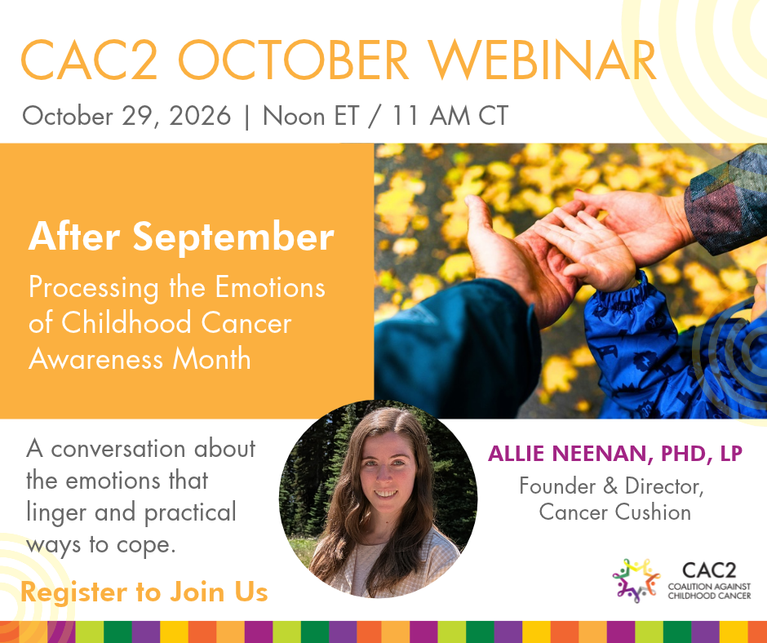
On October 29, CAC2 welcomed Allie Neenan, PhD, LP, licensed clinical psychologist and founder and director of Cancer Cushion, for a conversation about recognizing these emotions and caring for the people who carry this work. Moderated by CAC2 Board Member Misha Mehta, the webinar explored how families, survivors, and advocates can support their well-being while staying connected to a cause that means so much to them.
Recognizing the Emotional Demands of Advocacy
Sharing personal experiences, attending events, and hearing other families’ stories can bring hope and purpose while also resurfacing painful memories. Dr. Neenan discussed how stress may appear as irritability, withdrawal, difficulty concentrating, physical discomfort, or guilt.
She emphasized that these reactions deserve acknowledgment and support. Feeling overwhelmed does not mean someone cares less, and people do not need to reach a breaking point before seeking help.
Making Room for Care and Connection
Dr. Neenan shared practical approaches to managing overwhelm, including breaking tasks into manageable steps, naming emotions, connecting with supportive people, and making space for rest and enjoyable activities.
The discussion also addressed the pressure to feel grateful or to be doing “enough.” Hope, anger, gratitude, and grief can exist together. Allowing those emotions—and responding to ourselves with compassion—can help reduce the added burden of self-blame.
During the question-and-answer conversation, participants explored how to set boundaries around sharing personal stories, navigate advocacy after the loss of a child, recognize stress in siblings, and create more supportive spaces within childhood cancer organizations.
A central takeaway was that sustainable advocacy requires care for the people behind it. Our capacity can change, and choosing to rest, share less, or participate differently does not diminish our commitment.
Watch the Replay
Thank you to Dr. Neenan for sharing her expertise and compassionate guidance, and to everyone who joined this important conversation.
Watch the full webinar below for the presentation and discussion.
