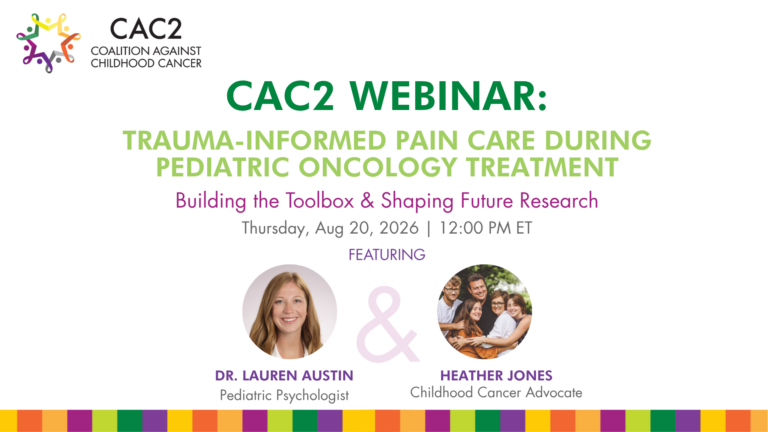

CAC2 recently hosted the webinar Trauma-Informed Pain Care During Pediatric Oncology Treatment: Building the Toolbox and Shaping Future Research on August 20, 2026. The session explored the important connection between pain, psychological distress, and medical trauma during pediatric cancer treatment, along with practical ways to help children and families better manage painful and stressful experiences.
Featured speakers included Dr. Lauren Hayes Austin, PhD, HSP, a pediatric psychologist and psychological researcher whose work focuses on pediatric pain and psychosocial care, and Heather Jones, a childhood cancer advocate who brought an important advocacy perspective to the conversation.
The discussion highlighted the many ways pain can affect children throughout cancer treatment, from acute and procedural pain associated with needle pokes, port access, surgeries, and other procedures to chronic pain that may continue well into survivorship. When pain is undertreated, its effects can extend beyond the physical experience, contributing to emotional distress, decreased functioning, and medical trauma.
Dr. Austin also shared evidence-based, non-pharmacological approaches that can be used alongside medical pain management, including psychoeducation, cognitive reframing, distraction, relaxation techniques, hypnosis, personalized “poke plans,” and parent coaching. The session emphasized the importance of giving children and families tools to understand pain, communicate about it, and participate actively in creating a plan for managing it.
The webinar also explored what it means to approach pediatric pain care through a trauma-informed lens. This includes recognizing how previous medical experiences may shape a child or family’s response to care, integrating that understanding into treatment practices, and working to prevent re-traumatization. As the presentation emphasized, assessing and treating pediatric pain is itself an important part of providing trauma-informed care.
The conversation closed with a look toward the future, including opportunities for survivors, families, advocates, healthcare professionals, and researchers to work together to improve access to evidence-based pain care, strengthen research, and advance more equitable, family-centered approaches across pediatric oncology.
Thank you to everyone who joined us for this important conversation and to Dr. Austin and Heather Jones for sharing their expertise and perspectives. CAC2 remains committed to bringing together researchers, healthcare professionals, advocates, survivors, and families to explore issues that can improve both the treatment experience and long-term quality of life for children impacted by cancer.
You can now view the webinar recording below, along with the presentation slide deck.