CAC2 Childhood Cancer Community News Digest (March 16-22)
Assorted News from the Last Week: State advocacy news from Sahil Mehta, son of CAC2 Members Misha Mehta and Sandeep Kolte (Neev Kolte & Brave
Home » Research & Treatment Focus Area » Ethics Think Tank
During the CAC2 Annual Summit in 2017, several members of the CAC2 community began discussing the topic of ethics as it affects non-profit organizations when funding research and clinical trials.
Upon further exploration of the topic, it was discovered that the literature has little to say about what obligations, if any, charitable organizations have when sponsoring pediatric oncology clinical trials. Nor is consideration given to how they might cultivate ethically robust partnerships between patients and relevant stakeholders within the pediatric cancer community.
This gap presented an opportunity for CAC2 to become a thought leader in the area. The group set as its goal to study these issues and produce a paper that would be a novel contribution to the literature and a help to the community.
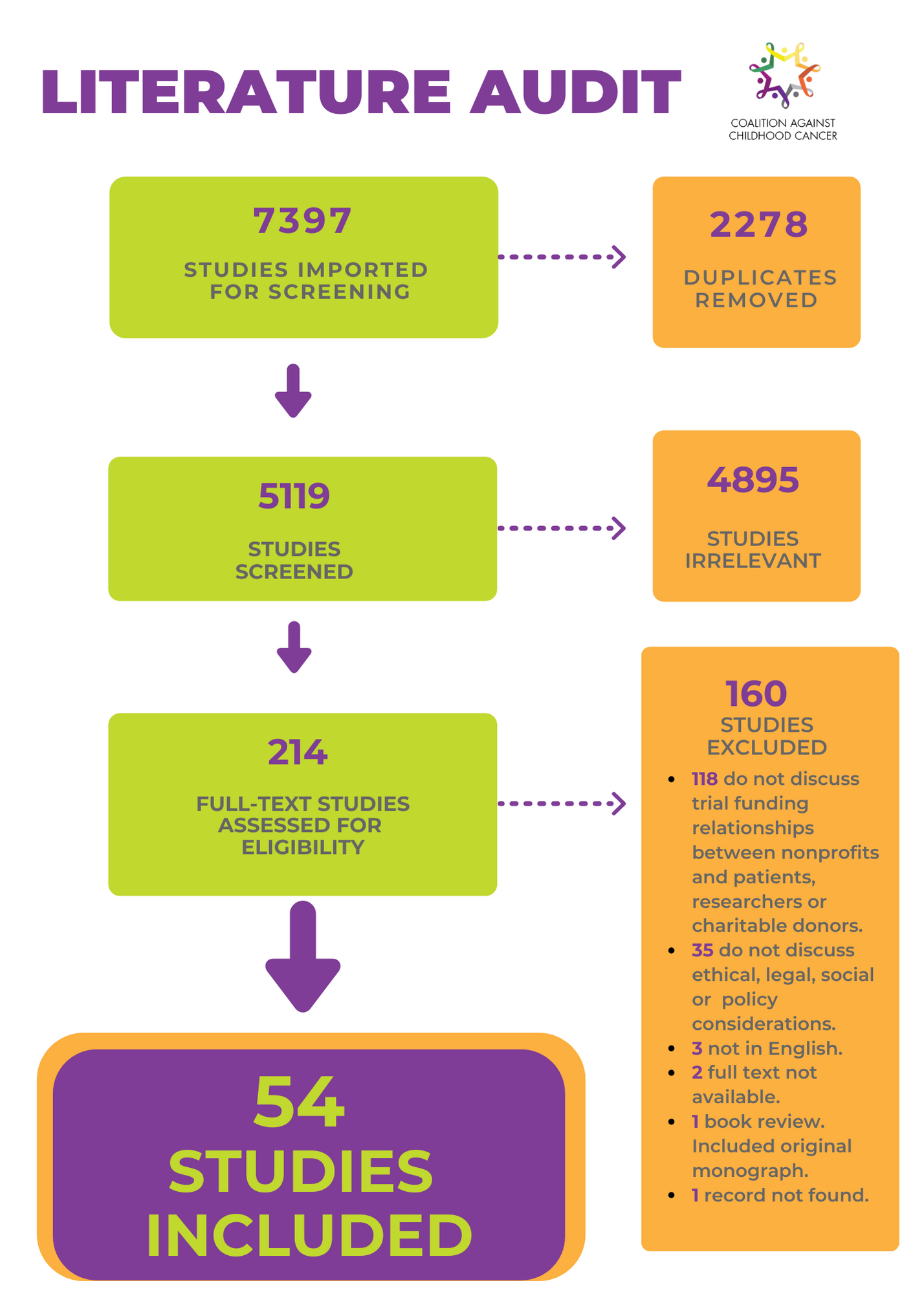
The Ethics Think Tank Working Group engaged Vasiliki Nataly Rahimzadeh, PhD, to assist with the process of refining the project goals and performing the systemic literature review that enabled us to explore the current ethical landscape around pediatric cancer clinical trial funding by nonprofit organizations.
The Ethics Think Tank Working Group of the Coalition Against Childhood Cancer conducted a systematic review of the literature to answer this four-part questions:
What are the ethical obligations of charitable organizations as they relate to funding clinical trial research to i) patients/families, ii) researchers, iii) donors, and iv) industry and academic clinical trials sponsors?
The results of this in-depth literature review were presented at SIOP in 2021 and published within both a white paper and a peer-reviewed manuscript published in Pediatric Blood and Cancer.
The research performed by the Ethics Think Tank revealed that there is limited published information pertaining to how non-profit organizations can effectively and ethically interact with industry when funding pediatric cancer clinical trials. As a first step in better defining this relationship type, CAC2, partnered with Colab Health, gathered representatives from non-profit organizations and industry for a workshop that sought to establish standards and principles for pediatric oncology drug development to drive meaningful, productive, and ethical interactions between organizations and pharmaceutical companies.
By fostering such interactions, the goal was to expedite and enhance drug development for pediatric cancer patients, ultimately improving their access to effective treatments and care.
The Ethics Think Tank Working Group continues to identify areas of ethical tension within the research funding landscape. The working group will continue to develop the PAIR project, based on needs identified in the workshop, to develop new resources to assist non-profit organizations as they strive to support pediatric cancer drug development ethically.
If you have resources, questions or requests, please share them at research@cac2.org! We invite you to contribute to the next phase of this project.

Assorted News from the Last Week: State advocacy news from Sahil Mehta, son of CAC2 Members Misha Mehta and Sandeep Kolte (Neev Kolte & Brave

Assorted News from the Last Week: Featured CAC2 blog post this week: Summer Camps for Kids with Cancer: A Family Guide. CAC2 Members (Mattie Miracle

Key Takeaways Summer camps for kids with cancer are medically supported and emotionally safe. Many are staffed by doctors and nurses experienced in pediatric oncology